
An implant is a serious investment, so it is natural to ask how long do dental implants last before you commit. The short answer, backed by long-term research, is that the large majority of implants are still working well after ten years, and many go on for twenty years or more. The crown that sits on it wears sooner and may need replacing once or twice in that time.
That said, implants do not come with a lifetime promise, and a small share do fail. Most failures have a cause you can influence: gum infection around the implant, smoking, uncontrolled diabetes, heavy grinding, or simply not cleaning around it.
This guide explains what the numbers mean, what shortens an implant’s life, and the habits that help yours go the distance.
How long do dental implants really last?
The most reliable figures come from studies that follow implants for a decade or longer. A systematic review that pooled long-term studies found an implant survival rate of about 96 percent at ten years (Howe, Keys and Richards, 2019). Another review with an average follow-up of more than 13 years reported survival of around 95 percent (Moraschini et al., 2015).
Survival here means the implant is still in the bone and in use. It does not mean nothing ever needed attention. Some of those implants had a crown replaced or a gum treatment along the way. Still, the picture is clear: an implant placed well, in healthy bone, and cared for properly is expected to last decades.
The implant itself is a titanium post that fuses with the jawbone over a few months, a process called osseointegration (bone bonding). Titanium is not attacked by decay and does not corrode in the mouth. Once bonded, the post has no biological reason to fail on its own. What threatens it is what happens around it, mainly infection of the gum and bone.
So when people ask whether implants last forever, the honest answer is that the post can last a lifetime in many people, but that depends on the mouth it lives in. The rest of this article is about the things that shorten that life, most of which are within your control. Results vary from person to person; our dentists assess this for you at the consultation.
Is the implant the same as the crown on it?
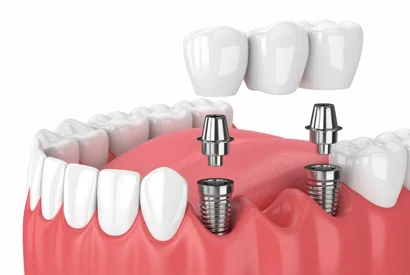
No, and this distinction explains a lot of confusion about lifespan. An implant tooth has three parts. The implant is the post in the bone. The abutment is a small connector that screws into the post. The crown (the cap) is the visible tooth that sits on the abutment.
The post is the part that lasts decades. The crown is a ceramic or metal-ceramic tooth that chews food every day, and like any crown it wears, chips, or loses its shine over time. Most implant crowns need replacing after ten to fifteen years, sometimes sooner if you grind your teeth or bite on hard things.
Replacing a crown does not mean the implant has failed. The post stays where it is, the old crown is removed, and a new one is fitted. It is a straightforward procedure, similar to replacing a crown on a natural tooth. The abutment screw can also loosen occasionally, which shows up as a crown that feels slightly wobbly, and is fixed by tightening it.
When you read a figure like 96 percent at ten years, it refers to the post. If you plan for an implant, plan for the post to be a one-time procedure and the crown to be a part that may need renewing once or twice over your life. Our page on dental implants and how they are placed explains each of the three parts and the steps involved.
What causes a dental implant to fail?
Implant failures fall into two groups by timing. Early failures happen in the first few months, before the post has bonded with the bone. Late failures happen years later, after the implant has been working normally. The causes are different.
Early failure is usually about healing. The bone did not bond to the post, often because of infection during healing, too much pressure on the implant too soon, poor bone quality, or a medical condition that slows healing. These failures are uncommon and are usually spotted at the review visits in the first few months after placement, which is exactly why those visits should not be skipped.
Late failure is nearly always peri-implantitis, which is gum disease around the implant. Plaque builds up where the crown meets the gum, the gum becomes inflamed, and the infection spreads into the bone. As bone is lost, the post loosens. A large review of studies found that peri-implantitis affects roughly one in five implant patients to some degree (Derks and Tomasi, 2015). It is the leading reason implants are lost years after placement.
Other late causes include overloading from heavy grinding (bruxism), a fractured post from an unusually heavy bite, or a poorly fitting crown that traps food. Most of these are preventable with good planning, a night guard where needed, and regular check-ups.
Does smoking, diabetes or gum disease shorten implant life?
Yes, all three do, and they are the questions our dentists ask before recommending an implant. None of them rules an implant out on its own, but each changes how carefully the case needs to be planned and how closely it needs to be followed up.
Smoking is the single biggest lifestyle risk. It reduces blood flow to the gum and bone, slows healing, and feeds gum infection. A systematic review of implant outcomes found that smokers had a significantly higher rate of implant failure than non-smokers, along with more bone loss around implants that survived (Chrcanovic, Albrektsson and Wennerberg, 2015). Stopping before the implant is placed makes a measurable difference.
Diabetes matters when it is poorly controlled. High blood sugar slows healing and weakens the gum’s defence against infection. People with well-controlled diabetes have outcomes close to those without it, which is why we ask about your recent HbA1c reading (a three-month sugar average) and may coordinate with your physician.
Gum disease (periodontitis, also called pyorrhea) is a risk because the same bacteria that damaged your natural teeth will attack the implant. An implant placed into a mouth with active gum disease is placed into an infection. This is why any gum disease is treated first, and why ongoing gum treatment and maintenance is part of the plan for anyone with a history of it.
If you have an implant and any of these risks apply to you, a review at Apollo Dental Vadavalli takes under 30 minutes and you can book for the same day on +91 88705 04111.
How does daily care change how long an implant lasts?
An implant cannot decay, and some people take that to mean it needs less cleaning than a natural tooth. It is the opposite. The gum seal around an implant is weaker than the one around a natural tooth, so plaque left at the gum line does damage faster. Daily cleaning is the single habit that protects your investment.
A practical routine for an implant looks like this:
- Brush twice a day with a soft brush, paying attention to where the crown meets the gum.
- Clean between the implant and its neighbours once a day with floss or a small interdental brush.
- Use a water flosser if the crown shape makes flossing awkward, especially for back teeth.
- Avoid using the implant tooth to crack open nuts, ice, or hard sweets.
- Wear a night guard if you grind your teeth, as grinding overloads the post.
- Do not smoke, or at least cut down as much as you can.
Professional cleaning every six months is the other half. A hygienist can reach plaque and tartar (calculus) below the gum line that a brush cannot, and can check the gum around the implant for early signs of inflammation. Special tools are used so the post is not scratched.
People who keep up this routine and attend their reviews are the ones whose implants reach the twenty-year mark. It is not complicated, but it does have to be consistent, in the same way that the tooth you lost would have needed care.
What are the warning signs of an implant in trouble?
An implant that is failing rarely does so silently. There are usually signs, and catching them early means the problem can often be treated before the post is lost. Look out for:
- Gum around the implant that bleeds when you brush, or looks red and puffy.
- A bad taste or bad smell from around the implant that does not clear with cleaning.
- The gum pulling back so that more of the metal collar or post becomes visible.
- The crown feeling loose or moving slightly when you press it.
- Discomfort or dull pain when chewing on the implant, which should normally feel like nothing at all.
- Pus or a small swelling at the gum near the implant.
Bleeding and puffiness are the earliest signs and often mean mucositis, which is gum inflammation around the implant without bone loss yet. At this stage a professional clean and better home care usually reverse it. Once bone loss has started (peri-implantitis), treatment is more involved, and the sooner it begins the more bone can be kept.
A loose crown is not the same as a loose implant. A crown that wobbles usually means the abutment screw needs tightening, a five-minute fix. A post that moves in the bone is a failing implant. Only an examination and an X-ray can tell the two apart, so do not wait to find out which one you have. If you have a gap that has not yet been treated, our page on missing teeth and why they should be replaced explains the options.
When should you see a dentist about your implant?
See a dentist within a few days if you notice bleeding, swelling, a bad taste, or any looseness around an implant. These are the signs that respond well to early treatment and poorly to waiting. If you have pain or a visible swelling, come in the same day.
Even with no symptoms, an implant should be checked at least once a year, and every six months if you have had gum disease, smoke, or have diabetes. The check includes probing the gum around the implant, checking the crown and screw, and an RVG digital X-ray every year or two to confirm the bone level is stable. A routine dental check-up covers all of this.
If you are still deciding whether to have an implant, the questions in this article are the ones to raise at your consultation: the state of your gums, your smoking and sugar control, whether you grind your teeth, and what the maintenance plan looks like. Our dental implant page walks through the assessment, the placement, and the healing period.
At Apollo Dental Vadavalli, implants are planned on an in-house CBCT scan (a 3D X-ray that shows bone height and width) by dentists with more than 5 years of experience in every specialty, and we are open every day from 10 AM to 8 PM for reviews and same-day appointments. Results vary from person to person; our dentists assess this for you at the consultation.
Frequently asked questions
Can dental implants last a lifetime?
The titanium post can, in many people. Long-term studies show about 96 percent of implants still in place after ten years, and many last 20 years or more. The crown on the implant wears like any tooth and usually needs replacing after 10 to 15 years. Good cleaning, not smoking, and regular check-ups make the biggest difference.
What is the most common reason dental implants fail?
Years after placement, the most common cause is peri-implantitis, a gum infection around the implant that destroys the bone holding it. It affects roughly one in five implant patients to some degree. Early failure, in the first few months, is usually because the bone did not bond to the post, often due to infection, smoking, or loading it too soon.
Do implants last longer than bridges?
Generally yes. Implant posts show survival of around 96 percent at ten years, while conventional bridges tend to need replacement sooner because the supporting teeth can decay or fracture. An implant also does not rely on neighbouring teeth, so it does not put them at risk. The crown on either option wears at a similar rate.
Can a failed dental implant be replaced?
Usually yes. The failed post is removed, the site is allowed to heal for a few months, and a new implant is placed, sometimes with a bone graft first if bone has been lost. Success rates for replacement implants are slightly lower than for first implants, so the cause of the first failure is addressed before trying again.
How often should a dental implant be checked?
At least once a year for everyone, and every six months if you smoke, have diabetes, or have had gum disease. The check includes probing the gum around the implant, checking the crown and screw, and an X-ray every year or two to confirm the bone level is stable. Professional cleaning at the same visit removes plaque the brush misses.
Does smoking really affect dental implants?
Yes. Smoking reduces blood flow to the gum and bone, slows healing after placement, and feeds gum infection around the implant. Research shows smokers have a significantly higher implant failure rate and more bone loss around surviving implants. Stopping before the procedure, even for a few weeks, improves the odds.
If you want an honest assessment of how long an implant would last in your mouth, or a check on one you already have, call +91 88705 04111 to book at Apollo Dental Vadavalli.
This article is general information and not a substitute for a dental consultation. Results vary from person to person.