
The root canal is done, the pain has gone, and the tooth feels normal again. So why is the dentist asking you to come back for a crown (a cap) and pay for a second procedure? It is a fair question, and the answer is simple. A crown after root canal protects a tooth that has been hollowed out and is now far more likely to crack under chewing pressure. Skip it, and there is a real chance of losing the tooth you just paid to save.
This is not a sales line. It is one of the better-studied facts in dentistry, and we explain the evidence below.
We also cover when the crown should be fitted, which teeth can sometimes manage with a strong filling instead, and what to do if you had a root canal years ago and never got the cap.
Why does a root-treated tooth become weak?
A tooth that needs a root canal has usually already lost a lot of its structure. Deep decay ate away part of it, an old filling took some more, and the root canal itself opens a channel through the biting surface into the pulp chamber (the hollow where the nerve used to be). What is left is a shell with thin walls.
For years people were told that root-treated teeth become brittle because they dry out without the nerve. Research does not support that. A study measuring the dentine of root-treated teeth found it was not meaningfully more brittle than that of living teeth (Sedgley and Messer, 1992). The weakness comes from missing tooth structure, not from dead tooth.
Think of a hollow bamboo stem with a slit cut into it. The material is as strong as ever, but the shape now flexes and splits where it is thinnest. Every time you bite on the tooth, the thin walls bend a little. Over months of chewing rice, dosa, and the occasional hard pappad, a crack starts at the weakest point.
Back teeth carry the heaviest load. Molars take forces of many kilograms with every bite, which is why they are the teeth most often lost after a root canal without a crown. Front teeth are under less pressure and sometimes get away with a filling, which we discuss further down.
What happens if you skip the crown after a root canal?
Three things tend to happen, in roughly this order. First, the temporary filling that seals the canal opening wears down or chips within a few weeks. It is designed to last only until the crown is fitted, not for months. Once it leaks, saliva and bacteria seep back into the canals and can reinfect the tooth.
Second, a wall of the tooth fractures. This can be a small chip that can still be repaired, or a split that runs below the gum and makes the tooth impossible to save. It often happens without warning while eating something ordinary.
Third, the tooth is lost. A well-known study followed root-treated teeth over several years and found that teeth left without a crown were about six times more likely to be lost than those that were crowned (Aquilino and Caplan, 2002). A later long-term study reached the same conclusion, noting that a crown and contact with neighbouring teeth were among the strongest predictors of a root-treated tooth surviving (Ng, Mann and Gulabivala, 2011).
The cost of skipping the crown is therefore rarely a saving. If the tooth reinfects, a re-treatment costs more than the first root canal. If it splits, the tooth is removed and needs replacing. The crown is the cheaper insurance by a long way. Results vary from person to person; our dentists assess this for you at the consultation.
How long after a root canal should you get the crown?
Sooner than most people think. The usual advice is to have the crown fitted within two to four weeks of finishing the root canal. That gives enough time to confirm the tooth has settled and is comfortable, but not so long that the temporary filling fails or the tooth cracks.
Some dentists prepare the tooth for the crown at the same appointment the root canal is completed, especially for molars. In that case a temporary crown protects the tooth until the final one arrives from the laboratory, usually in about a week.
There are situations where the dentist will wait a little longer. If the tooth had a large abscess, they may want to see the swelling gone and the tooth comfortable on biting before committing to a crown. If a re-treatment was done on a tooth that had already failed once, they may review it at a few weeks first. Even then, the wait is measured in weeks, not months.
What you should avoid is drifting. Life gets busy, the tooth feels fine, and the crown appointment slips from next month to next year. Many of the cracked root-treated teeth we see fall into this pattern. If you have finished a root canal at our clinic or anywhere else and have not booked the crown, treat it as a task with a deadline of one month.
If you have finished a root canal and the crown keeps getting postponed, a review at Apollo Dental Vadavalli takes under 30 minutes and you can book for the same day on +91 88705 04111.
Does every root-treated tooth need a crown?
Not quite every one, but most. The decision rests on how much tooth is left and where the tooth is in the mouth. Dentists usually recommend a crown when:
- The tooth is a molar or premolar, because these take the heaviest chewing forces.
- More than about a third of the tooth’s biting surface has been lost to decay, an old filling, or the root canal opening.
- One or more of the side walls of the tooth is thin or already cracked.
- The tooth is under extra load, for example if you grind your teeth (bruxism) or clench during sleep.
- The tooth already had a large filling before the root canal.
A strong tooth-coloured filling (composite) can be enough when the tooth is a front tooth with a small access hole and all its walls intact. Front teeth cut rather than crush food, so they flex less. Even then, a front tooth that has darkened after the root canal may be crowned or veneered for appearance rather than strength.
Ask your dentist to show you the tooth on the intraoral camera after the root canal. Seeing how thin the walls are usually makes the recommendation obvious. If the dentist says a filling is sufficient, that is worth accepting; the point is to make the choice from what is actually left of the tooth, not from a general rule. Our page on root canal treatment and what to expect afterwards explains the full sequence.
Which crown material is right after a root canal?
There are three main choices, and the right one depends on where the tooth is and what matters more to you: strength, appearance, or budget. All three protect the tooth. The differences are in how they look and how they wear.
A full metal crown is the strongest and thinnest option, which means less tooth needs to be trimmed to fit it. It is a sensible choice for a back molar that no one sees. A porcelain-fused-to-metal crown (PFM) has a metal core with tooth-coloured porcelain on the outside, a good middle ground for premolars, though a dark line can show at the gum over the years.
A zirconia crown is a strong white ceramic with no metal, and it is the most common choice today for both back and front teeth. It looks natural, does not show a dark line, and stands up well to chewing. For front teeth where appearance is the priority, an E-max crown (a glass ceramic) gives the most lifelike translucency.
For a molar, strength matters most; for a front tooth, appearance does. Our dentists explain the trade-offs and match the material to the tooth, your bite, and any grinding habit. Fees at our clinic range from ₹3,000 to ₹5,000 for a metal crown up to ₹9,500 to ₹35,000 for zirconia, and our dental crown cost guide explains what moves the figure within those ranges.
What is a post and core, and when do you need one?
Sometimes there is so little tooth left above the gum that a crown has nothing to hold onto. In that case the dentist builds the tooth back up first. A core is a filling material that rebuilds the missing bulk of the tooth. A post is a small rod placed inside one of the cleaned root canals to anchor that core, like a peg driven into the ground to hold a fence post.
Not every root-treated tooth needs a post. If two or more walls are still standing, a core alone is usually enough. A post is used when the walls are mostly gone and the core would otherwise have nothing to grip. Posts are typically made of fibre (which flexes a little like tooth) or metal.
The post and core are placed at the crown preparation visit, and the crown goes over the whole assembly. It adds one step but no extra appointment in most cases. A post does not strengthen the root; it only holds the core. This matters because a post placed in a very thin root can itself cause a crack, which is why the dentist checks root width on the X-ray before recommending one.
If your dentist recommends a post, the reason is almost always that the tooth has lost most of its crown. It is a sign the tooth was badly broken down, not a sign that anything went wrong with the root canal. It is also a sign that the final crown should not be delayed.
When should you see a dentist about a root-treated tooth without a crown?
If you finished a root canal more than a month ago and still have only a filling, book a review now, even if the tooth feels fine. A dentist can check whether the temporary seal is holding, whether any crack has started, and whether the tooth is still a good candidate for a crown. Most are, and fitting one takes two short visits. Bring the date of the root canal and any X-rays from it if you had it done elsewhere.
If the tooth has started to ache on biting, feels rough or sharp to the tongue, or has a piece missing, see a dentist within a few days. A chipped wall can often still be built up and crowned. A tooth that has split below the gum usually cannot, and the sooner it is assessed the more options remain. Our guide to why a tooth hurts and what it means covers what different types of pain suggest.
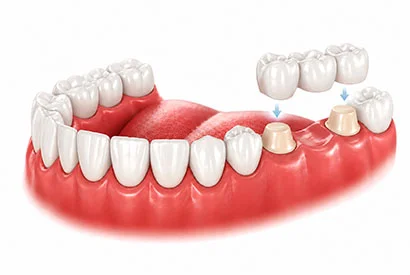
At Apollo Dental Vadavalli, our dentists have more than 5 years of experience in every specialty and can check a root-treated tooth with an RVG digital X-ray on the same visit. Our page on dental crowns and bridges explains the materials, the two-visit process, and how to care for a crowned tooth so it lasts.
Results vary from person to person; our dentists assess this for you at the consultation.
Frequently asked questions
Is a crown really necessary after a root canal?
For back teeth, almost always. The root canal removes tooth structure and leaves thin walls that crack under chewing pressure. Research shows root-treated teeth without a crown are about six times more likely to be lost. A front tooth with all its walls intact can sometimes manage with a strong filling instead.
How long can you wait to get a crown after a root canal?
Ideally two to four weeks. The temporary filling is only meant to last until the crown is fitted, and it can leak or chip after that. Waiting months raises the risk of reinfection or a crack. If you have already waited longer, get the tooth checked rather than assuming it is too late.
What happens if you never get a crown after a root canal?
The temporary filling wears down and bacteria re-enter the canals, or a wall of the tooth fractures while chewing. A small chip can often still be repaired and crowned. A split that runs below the gum usually means the tooth is lost and needs replacing, which costs far more than the crown would have.
Which crown is right for a root canal tooth?
A metal or zirconia crown suits a molar, where strength matters most. Zirconia is also the usual choice for premolars and front teeth because it looks natural and shows no dark line at the gum. For front teeth where appearance is the priority, an E-max ceramic crown gives the most lifelike result.
Does getting a crown after a root canal hurt?
No. The nerve has already been removed, so trimming the tooth for the crown is not felt, and most people need no anaesthetic. The gum around the tooth may feel slightly tender for a day after the impression or fitting. The crown itself feels high for a day or two until you get used to it.
If your root-treated tooth is still waiting for its crown, call +91 88705 04111 and book a same-day review at Apollo Dental Vadavalli before a crack decides the matter for you.
This article is general information and not a substitute for a dental consultation. Results vary from person to person.