
A front tooth is chipped, badly stained or oddly shaped, and you have been told it could have a veneer or a crown. The veneers vs crowns question turns on one thing: how much healthy tooth is left. A veneer is a thin shell bonded to the front face of the tooth and removes very little enamel. A crown (a cap) covers the whole tooth and requires much more of it to be trimmed away. If the tooth is mostly sound and the problem is on the surface, a veneer is usually the right choice. If the tooth is cracked, heavily filled or has had a root canal, a crown protects it in a way a veneer cannot.
Both can look excellent on a front tooth. Both are made of ceramic in most cosmetic cases. The difference is in what they cost the tooth, how they fail, and how long they last.
This guide compares the two on tooth removal, appearance, lifespan, the specific problems each suits, cost and daily care, so you can walk into the consultation knowing what to ask.
What is the difference between a veneer and a crown?
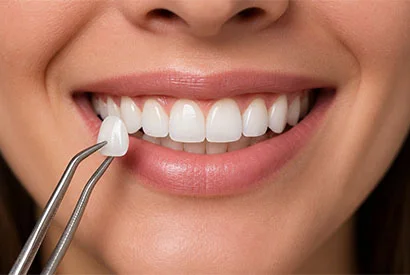
A veneer is a thin layer of ceramic or composite (tooth-coloured filling material), usually half a millimetre to a millimetre thick, bonded to the front surface of a tooth. It covers what people see when you smile and nothing else. The back of the tooth and the biting edge are mostly left as they are.
A crown covers the entire tooth above the gum: front, back, sides and biting edge. To make room for it, the tooth is trimmed down on every surface, and the crown is cemented over the prepared core like a cap over a peg. On front teeth, crowns are usually made of all-ceramic materials such as lithium disilicate (E-max) or zirconia, so they can look as natural as a veneer.
A veneer changes how a tooth looks; a crown changes how a tooth looks and holds it together. That is the difference in one line. A veneer relies on the tooth underneath for strength, which is why it needs a tooth that is largely intact. A crown provides strength itself, which is why it is the choice for a tooth that is weak.
There is also a middle option. Composite bonding is a veneer built up directly on the tooth in resin by the dentist in one visit, with little or no trimming. It costs less and can be repaired easily, but it stains and chips sooner than ceramic.
How much of the tooth is removed for each?
This is the point that should weigh most heavily, because enamel does not grow back. A veneer preparation removes a thin layer from the front of the tooth, usually within the enamel. A crown preparation removes tooth structure all the way round and from the biting edge, and on a front tooth that means cutting through the enamel into the dentine on most surfaces.
A laboratory study measured this directly on front teeth. A conservative veneer preparation removed about 3 percent of the crown of the tooth, a more extensive veneer preparation up to about 30 percent, while a full ceramic crown preparation removed around 63 to 72 percent (Edelhoff and Sorensen, 2002). A crown can take away more than twice as much tooth as even a heavy veneer preparation.
Why does that matter if the tooth is covered afterwards? Because the more dentine that is exposed during preparation, the closer the drilling comes to the pulp (the nerve inside the tooth). Teeth that have been crowned are more likely to need a root canal in the years that follow than teeth that have had a veneer. And if a veneer ever fails, the tooth underneath can still take a crown. The reverse is not true.
So the rule most dentists follow is to remove the least tooth that will solve the problem. If a veneer will do the job, a crown on that tooth is over-treatment. If the tooth is too damaged for a veneer to hold, a crown is not over-treatment, it is protection. Results vary from person to person; our dentists assess this for you at the consultation.
Which looks more natural on a front tooth?
When both are made well from ceramic, the difference in appearance is small, and most people cannot tell one from the other. Veneers have a slight edge in translucency because they are thin and let some of the natural tooth colour show through, the way real enamel does. This is why veneers are preferred for a smile makeover across several front teeth, where matching the natural glow matters.
Crowns on front teeth used to look opaque because they were made of porcelain over a metal core, and the metal sometimes showed as a dark line at the gum. Modern all-ceramic crowns have no metal and no dark line, and lithium disilicate crowns in particular can be layered to match the neighbouring teeth closely.
Where the tooth underneath is very dark, from a dead nerve or an old root canal, a crown can actually look better than a veneer. A thin veneer struggles to hide a dark core without looking grey, whereas a crown with an opaque inner layer masks it fully. This is one of the situations where the dentist may steer you towards a crown even though the tooth is strong enough for a veneer.
If the goal is to change several teeth at once, our smile design page explains how veneers, crowns, whitening and alignment are planned as one piece of work rather than tooth by tooth.
Which lasts longer, and what makes them fail?
Both last well. A long-term clinical study of ceramic veneers found around 94 percent still in place at five years and about 93 percent at ten years, falling to about 83 percent by twenty years (Beier et al., 2012). A large review of single crowns found five-year survival of roughly 95 percent for metal-ceramic crowns, with lithium disilicate crowns performing at a similar level (Sailer et al., 2015).
So at ten years the two are close. The difference is in how they fail. Veneers most often fail by chipping at the edge or by coming off in one piece, which is usually repairable or re-bondable. Crowns rarely come off, but when a crowned tooth fails it is more often because of decay at the margin where crown meets tooth, or because the tooth underneath develops a problem with the nerve or fractures at the root.
Bite habits decide the lifespan more than the material does. Grinding your teeth at night (bruxism), biting your nails, opening packets with your teeth, and chewing ice or hard sweets all shorten the life of both. A night guard for grinders is not optional if you want a front tooth veneer to last.
If a front tooth is bothering you, a check at Apollo Dental Vadavalli with an X-ray takes under 30 minutes and you can book for the same day on +91 88705 04111.
Chipped, stained, worn or root treated: which one for which problem?
Most front tooth problems fall into a handful of patterns, and each has a usual answer.
Usually a veneer, or bonding
- A small to medium chip on the edge of an otherwise sound tooth
- Deep staining that whitening has not shifted, such as fluorosis marks or tetracycline banding, on teeth that are structurally healthy
- A tooth that is slightly short, narrow or oddly shaped compared with its neighbour
- Small gaps between front teeth that you do not want to close with braces
- Mild wear on the edges from grinding, where the teeth are otherwise strong
Usually a crown
- A tooth that has had root canal treatment, which becomes brittle and needs full coverage
- A tooth that has lost more than about half its structure to a fracture or a large old filling
- A crack that runs into the tooth rather than a chip off the edge
- A very dark tooth where a thin veneer would not hide the colour
- A tooth that has already had a veneer fail more than once
The crown vs veneer chipped tooth question is the one we hear most. The honest answer is that it depends on the size of the chip. A chip that takes off a corner is a veneer or bonding case; a break that reaches the nerve or splits the tooth is a crown case, usually after a root canal. An RVG X-ray (a digital X-ray of one tooth) shows how close the break is to the nerve and settles the question quickly.
If the stain is the only problem, and the teeth are sound, remember that whitening comes first. A veneer or crown is chosen to match the shade of the surrounding teeth, so lightening them before the shade is picked avoids a mismatch later. Our page on stained teeth and the options for them runs through the order in which these are usually done.
What do veneers and crowns cost compared with each other?
Per tooth, a ceramic veneer and an all-ceramic crown are often in a similar range, because both involve a lab-made ceramic piece and two visits. Composite bonding costs considerably less than either. Metal-based crowns cost less than all-ceramic ones but are rarely used on front teeth for the reasons above.
What moves the figure is the material, the lab, and the number of teeth. An E-max crown at our clinic falls in the range of ₹14,000 to ₹30,000 depending on the case, and a zirconia crown from ₹9,500 to ₹35,000, with the higher figures for layered, highly aesthetic work on front teeth. Veneers vary by material and by whether they are made in a lab or built directly in composite.
A point that often gets missed: the cost of a crown may include work that a veneer would not need. A root canal before a crown, or a post to support a badly broken tooth, are separate steps with their own fees. When you compare quotes, compare the whole plan for the tooth, not just the final piece.
Because the range is wide and depends on the number of teeth, we do not list veneer prices here; the dental veneers cost page sets out what affects the figure and how it compares with crowns. The consultation gives you a plan for your tooth with the fee for each step laid out before anything starts.
When should you see a dentist about this?
See a dentist promptly if a front tooth has chipped, cracked, darkened or become loose, or if an old veneer or crown has come off. A chipped edge is not an emergency but it is sharp, catches the lip, and is easier to repair while the fragment and the tooth are clean. A tooth that has gone dark after a knock may need a root canal before anything cosmetic is planned.
At the consultation the dentist examines the tooth, takes an RVG X-ray to see how much sound structure remains and whether the nerve is healthy, and photographs the smile to plan shade and shape. From this you get a clear recommendation: bonding, a veneer or a crown, and the reason for it. Our dental veneers page explains the visit in more detail, and the crowns and bridges page covers the crown route.
Every specialty at our clinic has doctors with more than 5 years of experience, and cosmetic work is planned with the same care as any other treatment, with a trial shape in the mouth before the final piece is made. Results vary from person to person; our dentists assess this for you at the consultation.
Frequently asked questions
Is a veneer or a crown better for a front tooth?
It depends on how much healthy tooth is left. A veneer suits a tooth that is mostly sound with a surface problem such as a chip, stain or odd shape, and removes very little enamel. A crown suits a tooth that is cracked, heavily filled or root treated, because it holds the tooth together as well as covering it.
What is the difference between veneers and crowns?
A veneer is a thin ceramic or composite shell bonded to the front of the tooth only. A crown covers the whole tooth above the gum and needs far more of the tooth trimmed away. Veneers change appearance; crowns change appearance and add strength. Both can look natural when made from modern ceramics.
Crown or veneer for a chipped front tooth?
For a chip off the corner or edge of an otherwise healthy tooth, a veneer or composite bonding is usual. For a break that reaches the nerve, a crack running into the tooth, or a tooth that has lost about half its structure, a crown is needed, often after a root canal. An X-ray settles which applies.
Which lasts longer, veneers or crowns?
Both last around ten years or more with good care, and long-term studies show similar survival. Veneers tend to fail by chipping or coming off, which is often repairable. Crowns fail less often but when they do it is usually decay at the edge or a problem with the tooth underneath. Grinding and hard biting shorten the life of both.
Can a veneer be done instead of a crown after a root canal?
Usually not on a front tooth that has had a root canal, because the tooth becomes brittle and a veneer does not protect it from splitting. A crown covers and holds the whole tooth. The exception is a front tooth with a small access hole and plenty of sound structure, where a dentist may consider a veneer case by case.
If you are deciding between a veneer and a crown for a front tooth, call +91 88705 04111 and book a consultation with an X-ray, and we will tell you which one your tooth actually needs.
This article is general information and not a substitute for a dental consultation. Results vary from person to person.