

You have spotted a small brown hole in your four-year-old’s back tooth. The dentist says it needs a filling. Your mother-in-law says it is a milk tooth, it will fall out, why put the child through that? It is one of the most common arguments in Indian homes, so let us answer it directly. Cavities in milk teeth do need treatment in most cases, because that tooth may have five to eight more years of work ahead of it, and decay does not wait.
A milk tooth with a cavity does not simply sit there quietly until it falls out. The decay grows, reaches the nerve, causes pain and swelling, and can damage the adult tooth forming underneath. A small filling at four is far easier than an abscess at six.
This guide explains how tooth decay in children behaves, which cavities can be watched and which need filling, what baby teeth cavities treatment looks like at each stage, and how to keep new cavities from appearing.
Why do milk teeth get cavities so easily?
Milk teeth have a thinner layer of enamel (the hard outer shell) than adult teeth, and the layer under it, called dentine, is softer. So once decay starts, it reaches the pulp (the nerve inside the tooth) in a much shorter distance. A cavity that would take two years to become serious in an adult tooth can get there in six months in a milk molar.
Children’s diets make this worse. Frequent snacking on biscuits, chocolates, fruit juice in a sippy cup, and jaggery sweets keeps the mouth acidic for hours. It is how often sugar is eaten, not how much, that drives decay. Ten small sweets across the day do far more harm than the same amount eaten at one time after lunch.
Bedtime bottles are a special problem. Milk or juice pools around the upper front teeth while the child sleeps and saliva flow drops. This causes early childhood caries (bottle decay), which shows up as brown bands along the gumline of the front teeth in children as young as 18 months.
The WHO estimates that around 514 million children worldwide have untreated decay in milk teeth, making it the most common childhood disease (WHO, 2022). In India, surveys of preschool children regularly find that around half already have at least one decayed tooth (Mehta, 2018). Most of those cavities are never treated.
If the tooth will fall out anyway, why fill it?
Because the tooth is not going anywhere for years. Milk front teeth fall out around six to seven. The milk molars at the back, which is where most cavities sit, stay until age ten to twelve. A cavity found in a three-year-old’s molar has up to nine years to do damage. Leaving it is not a neutral choice.
Here is what happens when a milk tooth cavity is left alone.
- Pain: the decay reaches the nerve, and the child wakes at night, refuses to chew on that side, or complains during school exams when they least need it
- Infection: an abscess (pus pocket) forms at the root, showing as a gum boil or a swollen cheek, and sometimes fever
- Damage to the adult tooth: the adult tooth forms right under the milk tooth root, and a long-running infection can leave it stained, pitted or misshapen
- Space loss: if the milk molar is lost early, the neighbouring teeth drift into the gap, and the adult tooth comes in crooked or gets impacted (stuck under the gum), which later means braces
- Poor eating and growth: a child with sore teeth eats less and avoids hard foods like fruit and vegetables
- Spread: decay bacteria pass from one tooth to the next, so one untreated cavity often becomes three or four
Filling a milk tooth is not about the milk tooth alone. It is about keeping the child comfortable, protecting the adult tooth underneath, and holding the space for it. Untreated decay in milk teeth is also linked with more decay in adult teeth later, because the same habits and the same bacteria carry on.
Do all cavities in milk teeth need a filling?
No, and a good children’s dentist will tell you which is which. The decision depends on how deep the cavity is, where it sits, how old the child is, and how long that tooth still has left. Here is the usual thinking.
Cavities that can be watched or arrested
- White chalky spots with no hole: these are early decay in the enamel only and can be halted with fluoride varnish and better brushing
- A small cavity in a milk tooth that is already loose or due to fall out within six months
- Small cavities in a very young or very anxious child, where the dentist may paint on silver diamine fluoride (SDF), a liquid that stops the decay but stains the spot black
Cavities that need filling
- Any visible hole in a tooth that has more than a year of life left
- Decay between two back teeth, which grows fast and is hard to clean
- Cavities that catch food or cause sensitivity to sweet or cold
- Multiple cavities in the same mouth, which points to a high decay risk
Silver diamine fluoride deserves a mention because it is a useful option for toddlers. A review of trials found SDF applied once or twice a year arrests around two-thirds to three-quarters of active cavities in milk teeth (Gao et al., 2016). The downside is the black stain, so it is used mostly on back teeth or when a filling is not practical. Results vary from person to person; our dentists assess this for you at the consultation.
If you have seen a brown spot or hole in your child’s tooth, a check at Apollo Dental Vadavalli takes under 30 minutes and you can book for the same day on +91 88705 04111.
What does a filling in a milk tooth involve?
A filling in a milk tooth is quicker and simpler than most parents expect. For a small to medium cavity the whole thing takes 15 to 25 minutes, and many children do not need an injection at all if the decay is shallow.
- The dentist explains and shows each instrument first, so nothing is a surprise (the tell-show-do method)
- A numbing gel is applied to the gum, and if the cavity is deep a small injection follows; most children feel only pressure
- The soft decayed part is removed with a small slow drill or a hand instrument
- The hole is filled with a tooth-coloured composite or a glass ionomer filling, a material that slowly releases fluoride and bonds well to milk teeth
- The filling is shaped and checked so the child can bite normally straight away
Our dental fillings page explains the difference between the filling materials. For milk teeth, glass ionomer is often chosen because it can be placed quickly in a wriggly child and does not need a completely dry tooth.
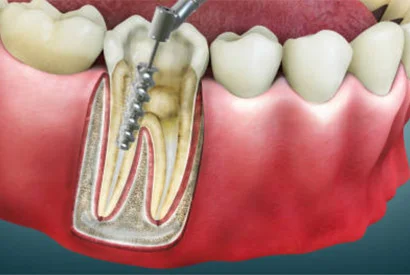
If the decay has already reached the nerve, a filling alone is not enough. The dentist then does a pulpotomy or pulpectomy (a milk tooth root canal, where the infected nerve is removed and the space is filled with a paste that dissolves as the root does). The tooth is then covered with a small stainless steel crown (cap) to keep it strong. This saves the tooth until it is ready to fall out on its own. If the tooth is too damaged, removal and a space maintainer (a small wire that holds the gap open) is the fallback.
Will the filling hurt, and how do you keep a child calm?
This is the real worry behind most delays. The honest answer is that a filling in a milk tooth is usually well tolerated, especially when it is done early, before the tooth aches.
A shallow cavity often needs no injection at all. For deeper ones, numbing gel goes on first, and the injection is given slowly while the child is distracted. Most children report a pinch and then nothing. The drill sound is more upsetting than any feeling, so many dentists let the child watch a cartoon on a phone during the work.
What helps on the day
- Book a morning slot, after breakfast, when the child is rested
- Avoid the words hurt, injection and drill at home; say the dentist is going to clean the tooth and put a sleeping medicine on it
- Let the child bring a toy, and stay in the room where they can see you
- Praise afterwards for being brave, but keep the reward away from sweets
- Tell the child not to chew on the numb side for two hours, so they do not bite their lip
For very young, very anxious or special needs children, or for several cavities at once, the dentist may suggest treating under mild sedation or general anaesthesia in a hospital setting. This is discussed case by case. Our children’s dentistry page covers how the team works with anxious children.
How do you stop new cavities appearing after the filling?
A filling fixes one tooth. It does not change the reason the cavity appeared. If diet and brushing stay the same, new cavities follow within a year or two.
- Brush twice a day with fluoride toothpaste: a rice-grain smear under three years, a pea-sized amount from three to six, and a parent does the brushing or checks it until at least age seven
- Brush last thing at night, and nothing but water after that
- No bottle or sippy cup of milk or juice in bed; water only if a bedtime drink is needed
- Keep sweets, chocolates and biscuits to mealtimes, not as all-day snacks or school tiffin fillers
- Swap juice for whole fruit and plain water; a glass of juice has as much sugar as a soft drink
- Fluoride varnish at the dentist every three to six months if the child has had cavities before
- Ask about sealants for the adult molars when they arrive around age six
A Cochrane review found that fluoride varnish applied regularly cuts decay in milk teeth by about a third (Marinho et al., 2013). Combined with the diet changes above, most children who have had one round of fillings do not need another. The filling buys time; the habits keep the teeth.
A six-monthly dental check-up catches any new white spots while they can still be reversed with varnish alone.
When should you see a dentist about your child’s cavity?
As soon as you see a brown spot, a hole, or a chalky white line along the gum. Do not wait for pain. By the time a milk tooth hurts, the decay has usually reached the nerve, and a simple filling has become a milk tooth root canal or an extraction.
Book a same-day appointment if your child has any of these.
- Toothache that wakes them at night or stops them eating
- A swollen cheek, a gum boil, or pus near a tooth
- Fever along with a sore tooth
- A tooth that has broken off at the gum
- Pain that has stopped suddenly after weeks of aching, which often means the nerve has died, not that the problem has gone
The tooth pain guide explains what different types of ache mean. For children, the children’s dentistry team at Apollo Dental Vadavalli treats cavities in milk teeth every day of the week, 10 AM to 8 PM, with same-day slots for a child in pain. Every specialty here has doctors with more than 5 years of experience, in-house RVG digital X-ray shows decay between the back teeth in seconds, and every instrument is autoclave sterilised or single-use.
Frequently asked questions
Do cavities in milk teeth need to be filled?
In most cases, yes. Milk molars stay in the mouth until age ten to twelve, so a cavity at three or four has years to cause pain, infection and damage to the adult tooth forming underneath. Only early white spots, or small cavities in teeth about to fall out, can be safely watched or treated with fluoride.
What happens if a cavity in a baby tooth is not treated?
The decay reaches the nerve and causes pain, then an abscess with swelling and sometimes fever. The infection can stain or damage the adult tooth forming below. If the milk tooth is lost early, the neighbouring teeth drift into the gap and the adult tooth comes in crooked.
Does filling a milk tooth hurt?
Shallow cavities often need no injection at all. Deeper ones are numbed with gel and then a small, slow injection, so the child feels pressure rather than pain. The filling itself takes 15 to 25 minutes. Children treated early, before the tooth aches, usually manage the visit calmly.
What is the black stuff the dentist wants to paint on my child’s tooth?
That is silver diamine fluoride (SDF), a liquid that stops decay from growing without any drilling. It is useful for toddlers and anxious children. The drawback is that it turns the decayed spot black, so it is mostly used on back teeth or when a filling is not practical yet.
Can a milk tooth get a root canal?
Yes. When decay reaches the nerve, the dentist removes the infected nerve and fills the space with a paste that dissolves along with the root when the tooth is ready to fall out. The tooth is then covered with a small steel crown (cap). This keeps the tooth working until the adult tooth is ready.
How do I stop my child getting more cavities?
Brush twice daily with fluoride toothpaste, with a parent doing or checking it until about age seven. Keep sweets and juice to mealtimes, never in bed. Choose water between meals. Get fluoride varnish at the dentist every three to six months if the child has had cavities before, and ask about sealants at age six.
If you have spotted a hole or a brown spot in your child’s milk tooth, call +91 88705 04111 to book a same-day check at Apollo Dental Vadavalli before it starts to hurt.
This article is general information and not a substitute for a dental consultation. Results vary from person to person.